


Dick’s and Best Buy Both Raise Their Dividends. Only One Easily Covers the Check
Dick’s and Best Buy Both Raise Their Dividends. Only One Easily Covers the Check

Chris LangeSat, October 3, 2026 at 12:45 PM UTC
0

dickssportinggoods.comQuick Read -
BBY's 4.3% yield is backed by 157% free cash flow coverage, while DKS covered just $49M against $225M in dividends through the first half.
Dick's Foot Locker segment posted a $31.9M operating loss, forcing a full-year EPS guidance cut from a prior range of $13.50 to $14.50 down to a new range of $11 to $12.
Dick's trades at a cheaper 12x earnings but has fallen 30% year to date, while Best Buy surged 38% and raised fiscal 2027 EPS guidance.
Building a portfolio and living off one are two completely different skills, and almost nobody teaches the second. This problem is what The Definitive Guide to Retirement Income helps, and it is free today. Read more here. (Sponsor)
Which retail dividend holds up better for a retirement-focused investor: Dick's Sporting Goods (NYSE:DKS) or Best Buy (NYSE:BBY)? Best Buy has the stronger income profile, and the cash flow statements show why. Both raise their dividends, and both depend on discretionary spending in physical stores. Right now, only one of them pays its dividend easily out of free cash flow.
Dividend Income: Best Buy Pays More and Covers It Better
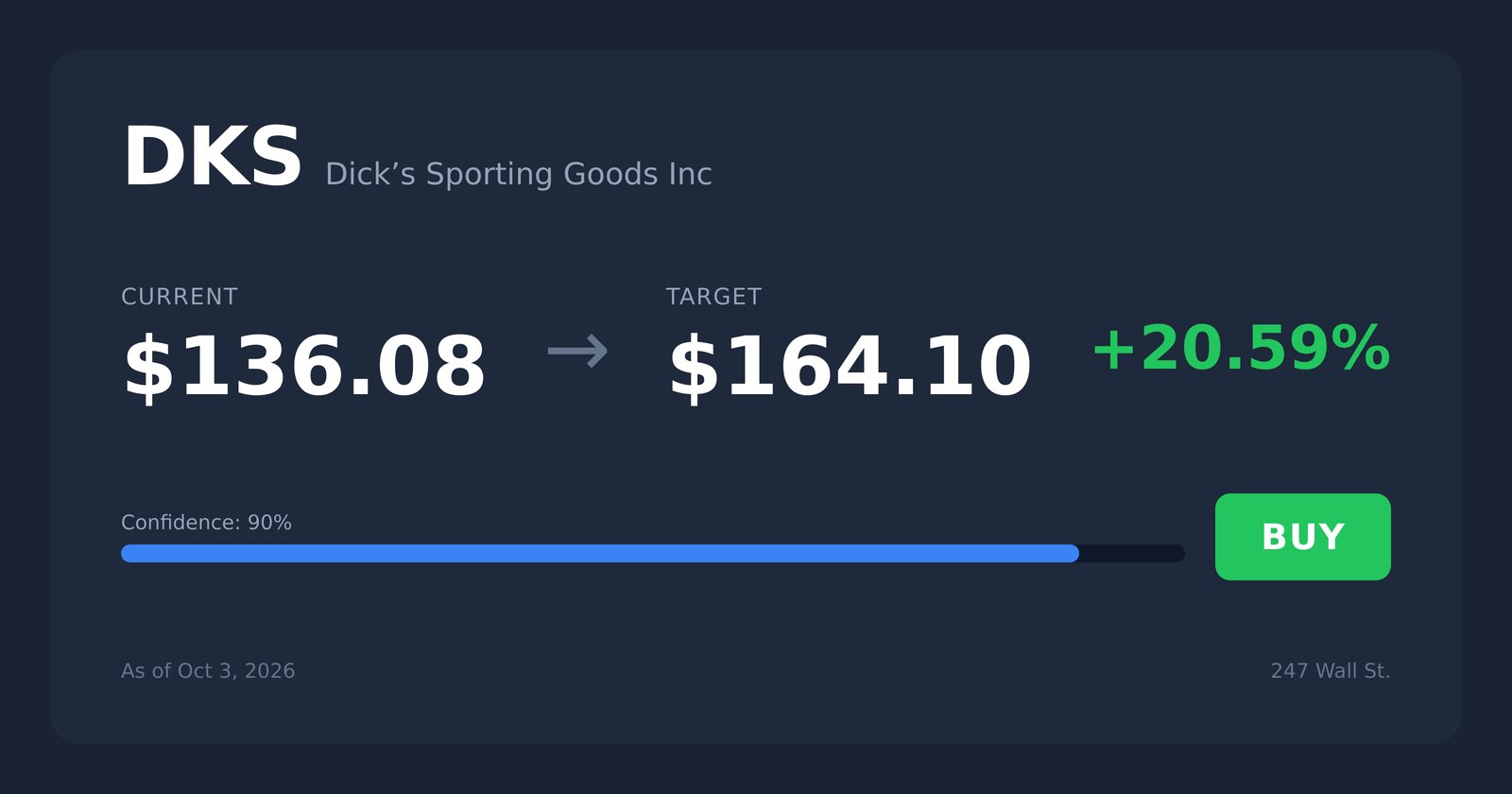
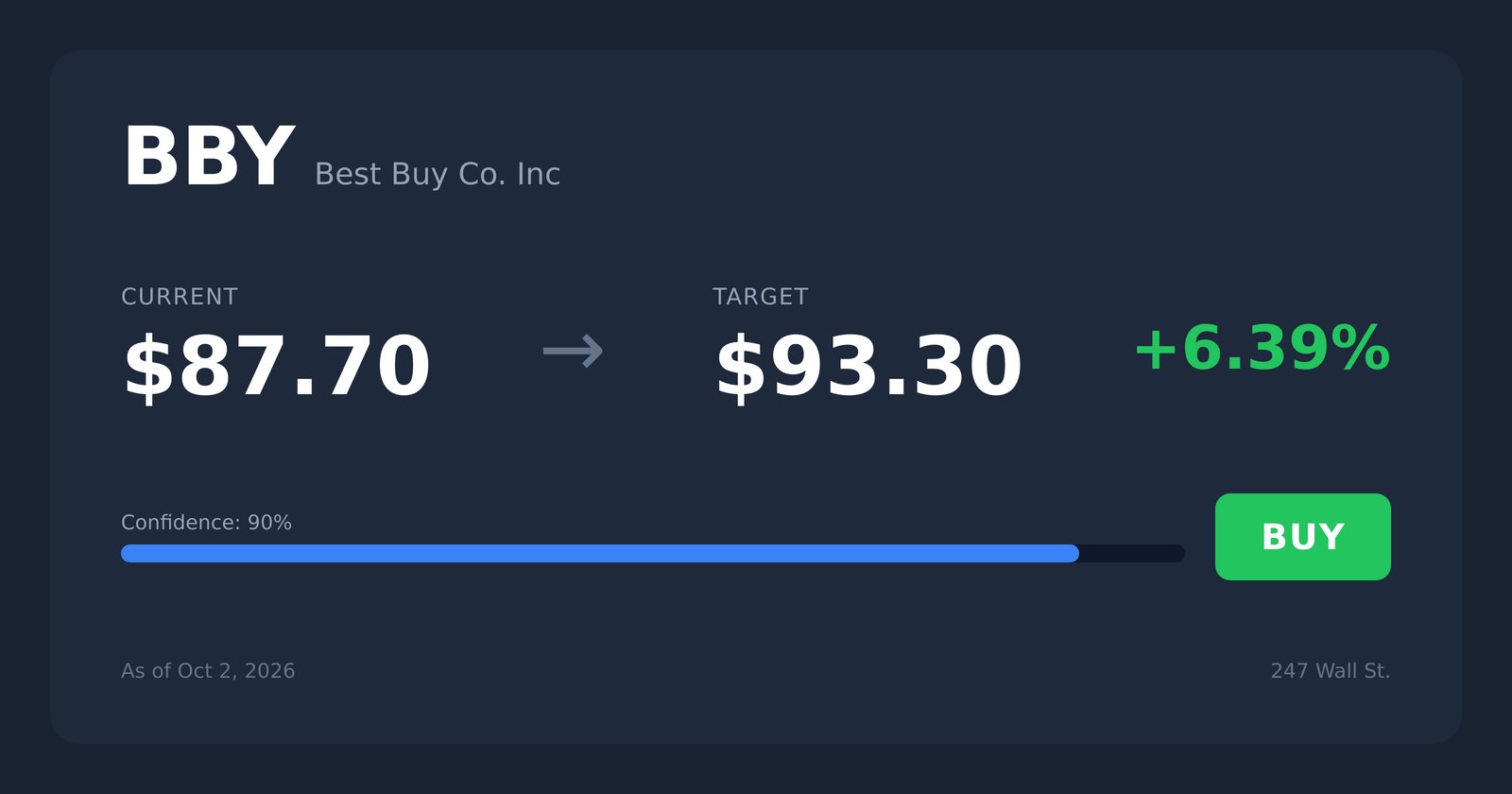
At $88.84, Best Buy's $3.84 annualized dividend yields about 4.3%. Dick's $5.00 annualized payout yields about 3.7% at $136.43.
DKS Price Target — 24/7 Wall St.
BBY Price Target — 24/7 Wall St.
Best Buy's coverage is stronger. Best Buy produced $1.26B of free cash flow in its fiscal year ended January 2026, compared with $801M in dividends. That is roughly 157% coverage. Over the first half of fiscal 2027, operating cash flow minus capex came to about $952M, against $405M paid out.
Now Available: The Definitive Guide to Retirement Income
Many successful investors eventually reach the same moment. The saving is done, the portfolio is built, and the question quietly changes from how much can I grow this to how much can I take out? Get that second question wrong and decades of good investing can come apart in a handful of years.
That is exactly what The Definitive Guide to Retirement Income helps answer. It covers what your retirement could actually cost, which income sources are worth using, and the withdrawal math that decides whether the money lasts. It is free today from Fisher Investments. Read More Here ›
The buffer at Dick's is much thinner. Free cash flow of about $482M in the fiscal year ended January 2026 covered $414M of dividends by roughly 116%. Through the first half of 2026, free cash flow was about $49M against $225M in dividends. Management also guides full-year net capex to roughly $1.4 billion. The balance sheet can cover the shortfall for now, with $914 million in cash and no borrowings on a $2 billion credit facility.
Advertisement
Dick's does have the stronger record of growing its payout. Its quarterly dividend rose from $0.3125 in 2020 to $1.25 today, and it paid a $5.9375 special distribution in September 2021. Best Buy's latest raise was just 1%. Even so, a retiree is better served by a well-covered dividend that grows slowly than by fast raises that cash flow is not currently funding (the kind of coverage gap we highlighted among the seven warning signs in our free dividend traps guide).
Business Durability: Best Buy's Momentum Beats Dick's Foot Locker Drag
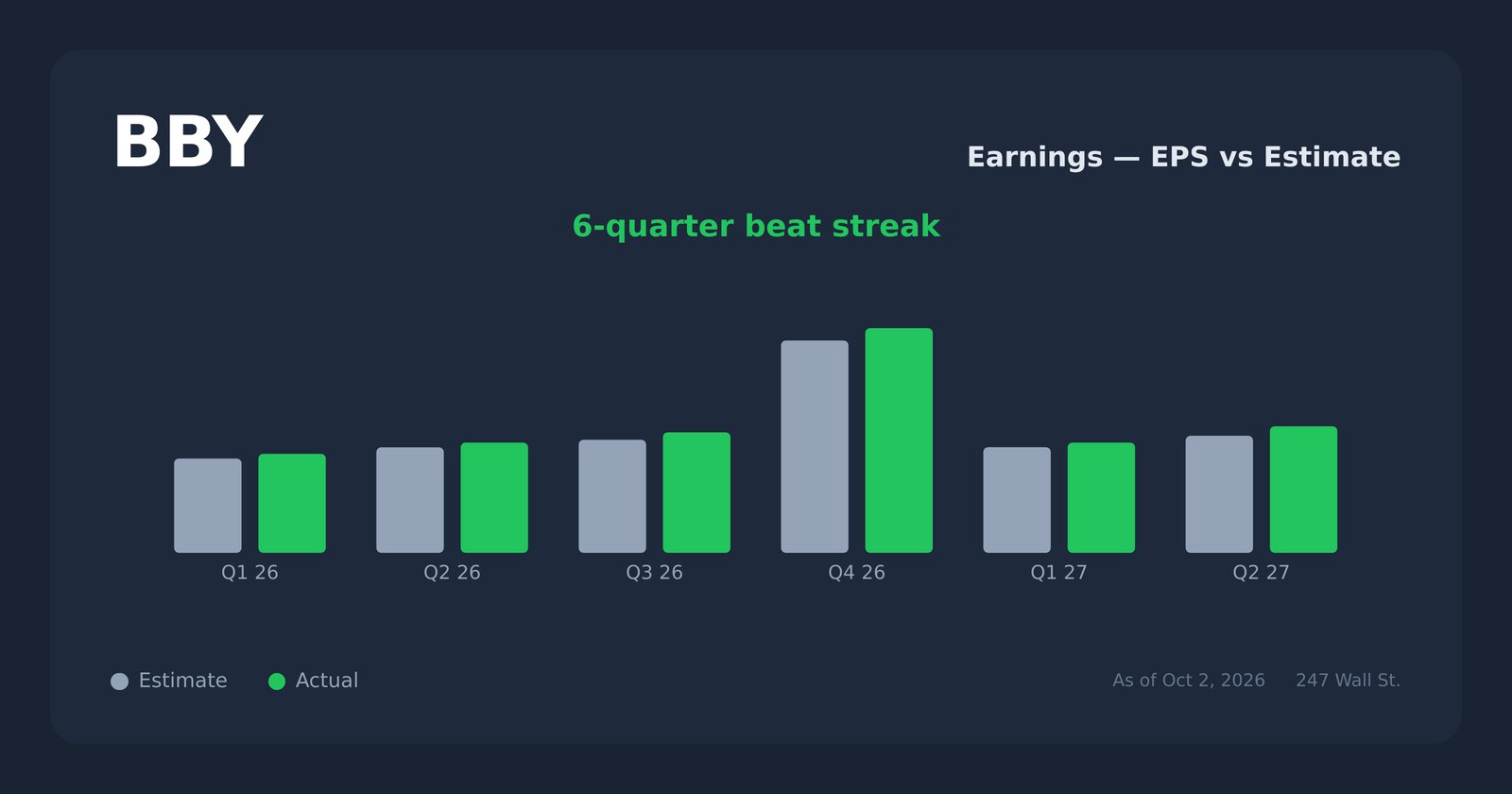
Best Buy has now beaten EPS estimates five quarters in a row. In the latest quarter, adjusted EPS was $1.47 against a $1.36 estimate, and comparable sales rose 4.1%. The company raised fiscal 2027 adjusted EPS guidance to $6.70 to $6.90. Ads and the online marketplace are adding higher-margin profit, with marketplace sales volume expectations raised to $1.3 billion. Electronics still face price swings and replacement cycles. Computing average selling prices rose by the mid-teens while unit sales fell by a high single-digit percentage, and management expects computing growth to slow. Jason Bonfig takes over as CEO on Nov. 1.
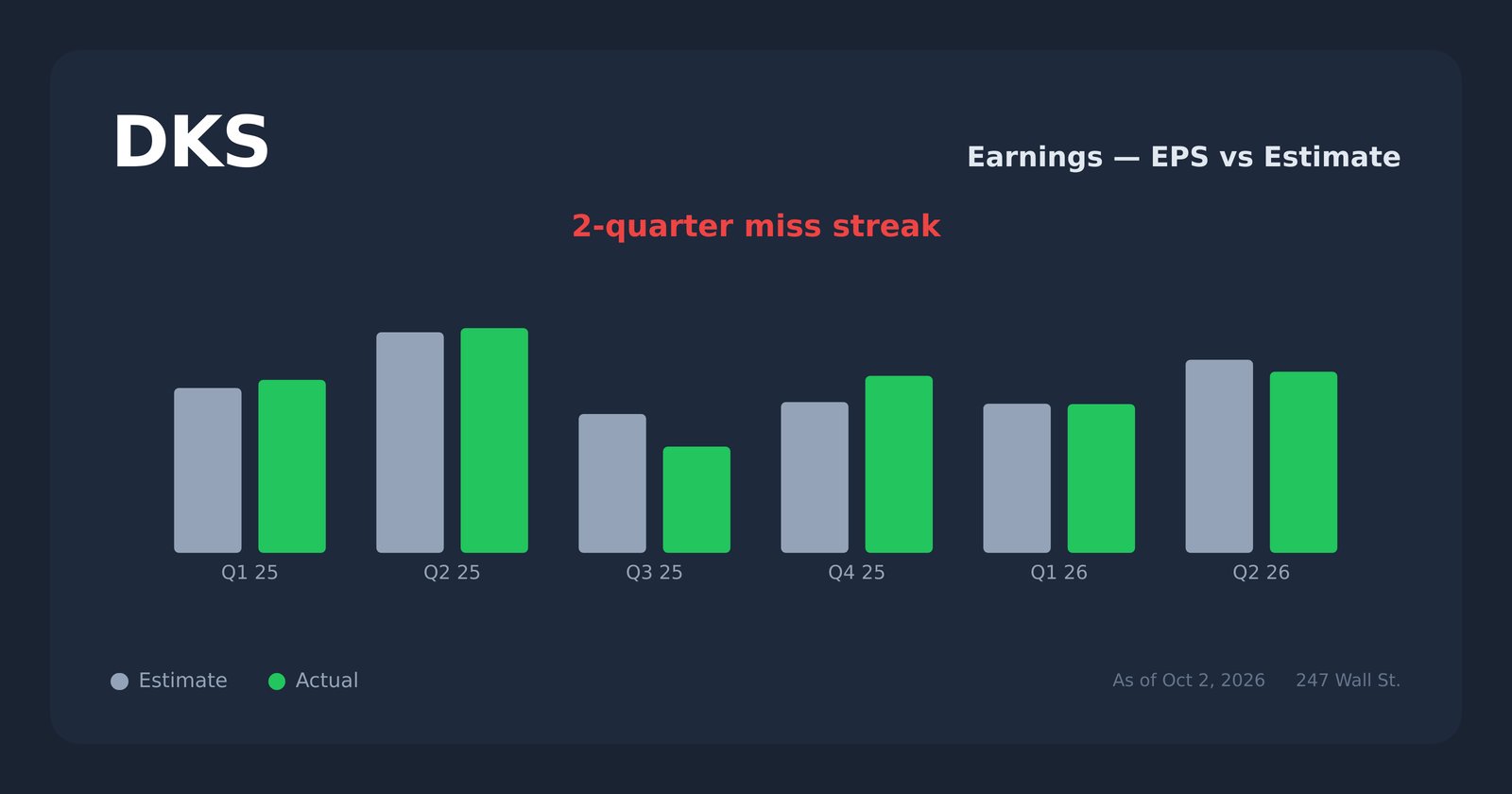
The core Dick's chain is healthy, with comparable sales up 4.9%. Foot Locker is dragging results. That section posted a $31.9M operating loss, and Dick's cut full-year EPS guidance to $11.00 to $12.00 from $13.50 to $14.50. Management said, "We're going to experience some pain at least through the end of this year."
DKS Earnings Explorer — 24/7 Wall St.
BBY Earnings Explorer — 24/7 Wall St.Valuation: Dick's Is the Cheaper Stock
Dick's trades at about 12x the midpoint of its guidance, compared with roughly 13x for Best Buy. Measured against those same midpoints, its dividend uses only about 43% of earnings, versus 56% at Best Buy. Dick's shares are down 29.59% year to date, while Best Buy is up 37.92%. Analysts' average target for Dick's is $158.27. Best Buy's average target of $86.95 sits below its current price. Dick's clearly wins on valuation.
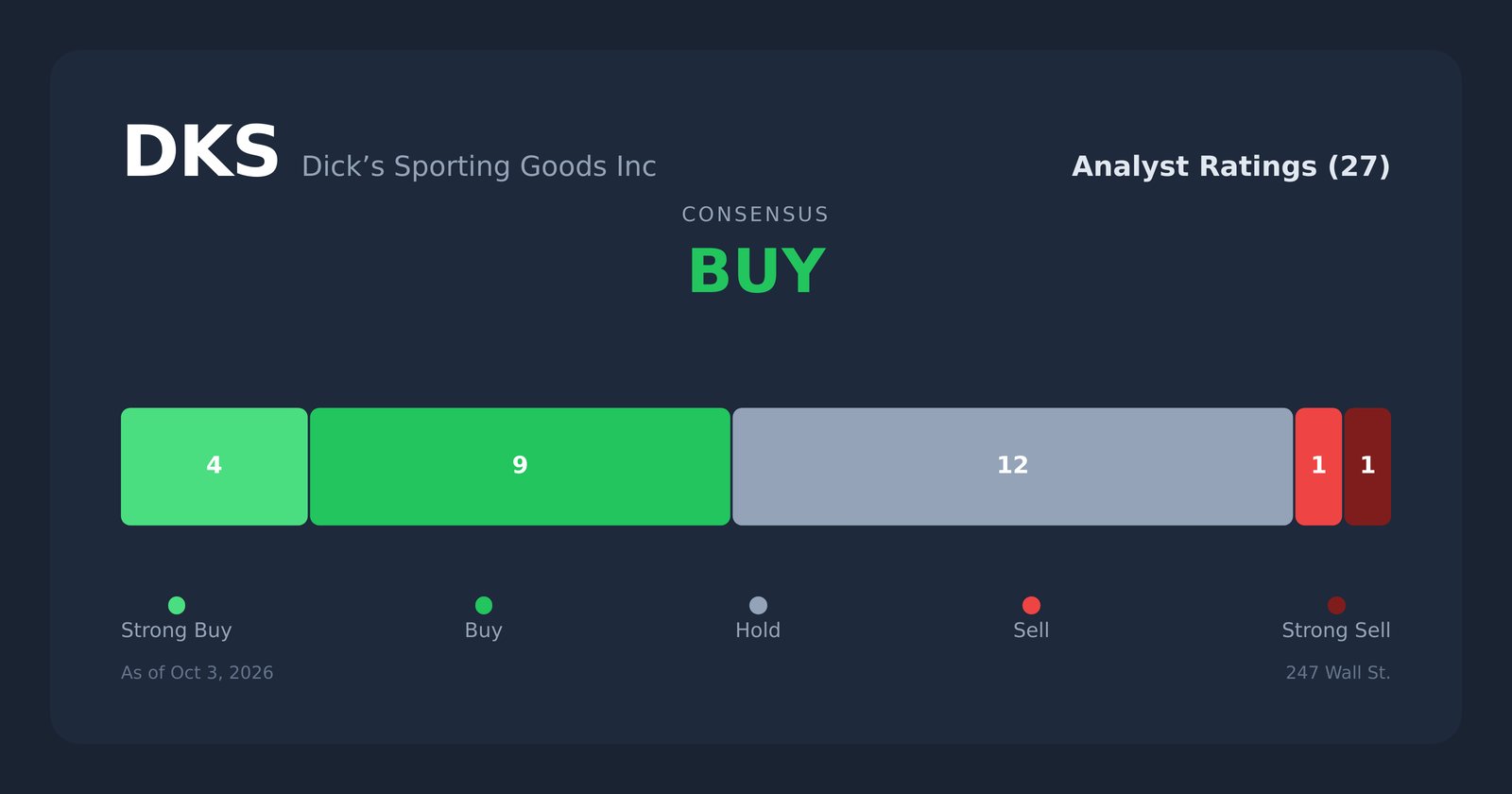
DKS Analyst Ratings — 24/7 Wall St.
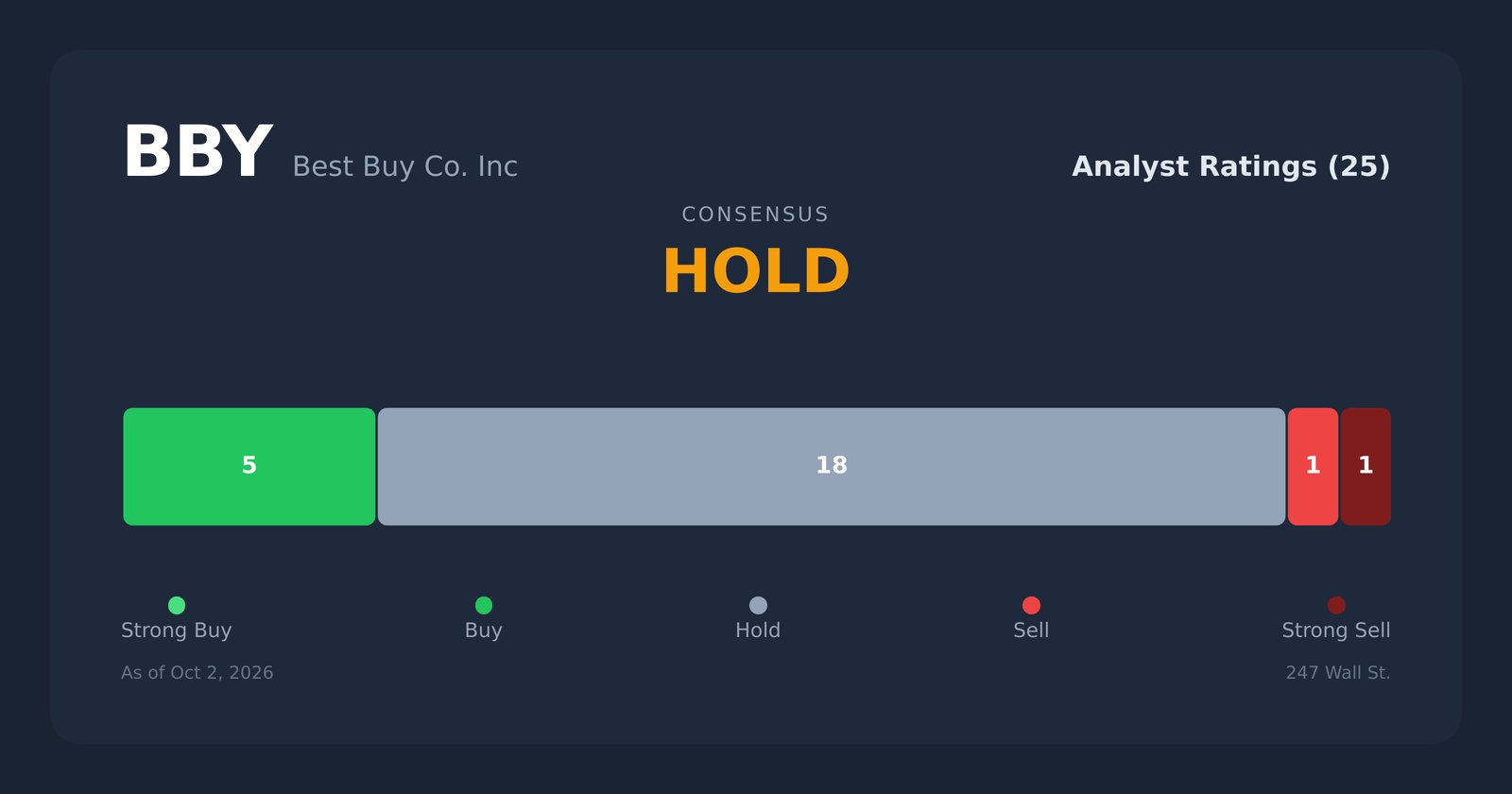
BBY Analyst Ratings — 24/7 Wall St.Verdict: Best Buy Earns the Retirement Income Slot
For an investor who lives on dividend checks, Best Buy has the stronger profile. It offers the higher yield, free cash flow that covers the payout with room to spare, and guidance that is rising. Dick's fits a longer total-return horizon that can handle the Foot Locker turnaround in exchange for the lower valuation.
What would flip the outcome: Foot Locker returning to a section profit while Dick's capex comes down far enough that operating cash flow covers the dividend again. On Best Buy's side, comparable sales turning negative as the computing cycle passes, or a new CEO scaling back shareholder returns, would restart the debate.
Released: The Definitive Guide to Retirement Income
(Sponsor) Most people spend their entire working lives focusing on one thing: growing a pile of money. Then they retire and discover the skill they actually need is close to the opposite. Turning that pile into steady income, year after year, through good markets and bad, without ever running out.
It may be the least discussed and most consequential transition in personal finance, and plenty of otherwise careful investors walk into it with no real plan. That is exactly what The Definitive Guide to Retirement Income helps answer. It is a free guide from Fisher Investments covering what your retirement will really cost, where the cash flow should come from, and how much you can safely withdraw each year. Learn more here. Learn More Here ›
Contact editorial@247wallst.com for any questions or corrections.
Source: “AOL Money”
