


Christopher Nolan says amateur film criticism has a ‘fundamental flaw’
Christopher Nolan says amateur film criticism has a ‘fundamental flaw’

Shahana YasminMon, August 3, 2026 at 9:29 AM UTC
0
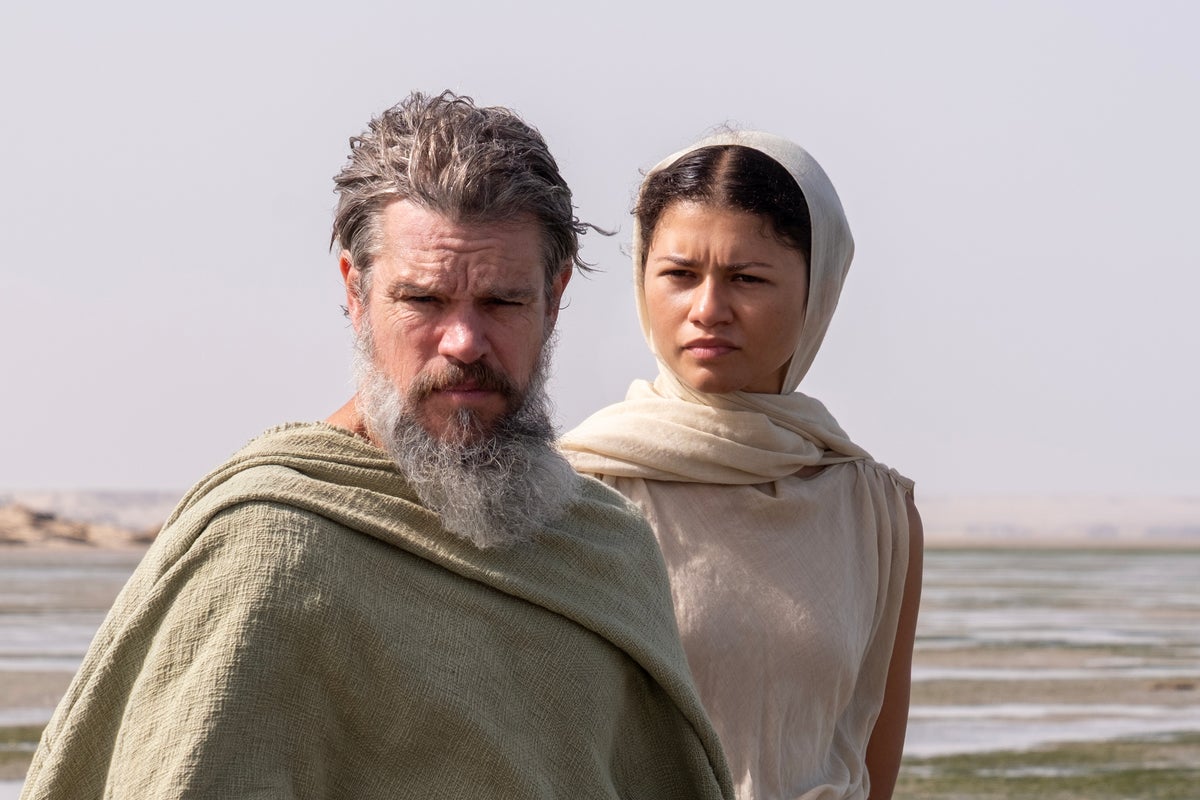
The Odyssey is Christopher Nolan’s adaptation of Homer’s Greek epic (Universal Pictures)
Christopher Nolan has called out a “fundamental flaw” in amateur film criticism, arguing that audiences are too quick to dismiss movies once they recognise the storytelling techniques behind them.
Referring to his interpretation of Odysseus, which sees the hero of The Odyssey portrayed as a military genius forced to confront the consequences of his actions, the Oscar winner said: “The criticism that is often levelled at movies in general is, ‘Oh the character has to be made sympathetic, so the character is manipulated in different ways or changed in different ways.’ That’s a fundamental flaw of film criticism in a way.”
“Because to be able to identify the mechanism does not invalidate the mechanism. And that’s a real problem in criticism today,” the director told political philosophy lecturer and podcaster Zhong Shu.
“People have this idea that, ‘Because I can understand why the story affects me the way it is, therefore, it didn’t work.’ That’s not how storytelling works,” he continued, adding that filmmakers had to balance their intentions with “the energy that the audience brings” to a story. “The fact that that mechanism is identifiable to people doesn’t invalidate it.”
The Odysseyis Nolan’s film adaptation of Homer’s Greek epic, following Odysseus’ perilous journey home to Ithaca after the Trojan War. Matt Damon stars as the king of Ithaca, with Anne Hathaway as his wife Penelope and Tom Holland as their son Telemachus. The ensemble cast also includes Zendaya as the goddess Athena, Charlize Theron as the nymph Calypso, Robert Pattinson as the suitor Antinous and Himesh Patel as Odysseus’ second-in-command, Eurylochus.
Nolan clarified that his criticism was aimed primarily at “amateur criticism” rather than professional reviewers.
“That can be true of certain elements, and film grammar, film language evolves with that. So when a trope becomes too familiar to an audience, then it has to be changed,” he said.
Advertisement
“But we do, as filmmakers, avail ourselves of that common language. We build on that understanding. Our audience has seen many films and they understand that language.”
While Nolan didn’t mention any particular review, The Odyssey became a topic of heated debate after Emily Wilson, whose 2017 English translation of The Odyssey the filmmaker had cited as an influence on his movie, described the screenplay as “abysmal”.
In a review for the London Review of Books, Wilson argued that its themes had been “filtered through contemporary American ideas about the importance of philanthropic charity”, adding that this was “not in itself a problem, but it is a problem if the film’s own values and vision don’t hang together”.
The review led to novelist Joyce Carol Oates coming to Nolan’s defence, criticising Wilson’s “tone of dismissal & haughty superiority” and accusing her of speaking in “the crude language of MAGA folks” rather than engaging with his interpretation of Homer “in a collegial manner”.
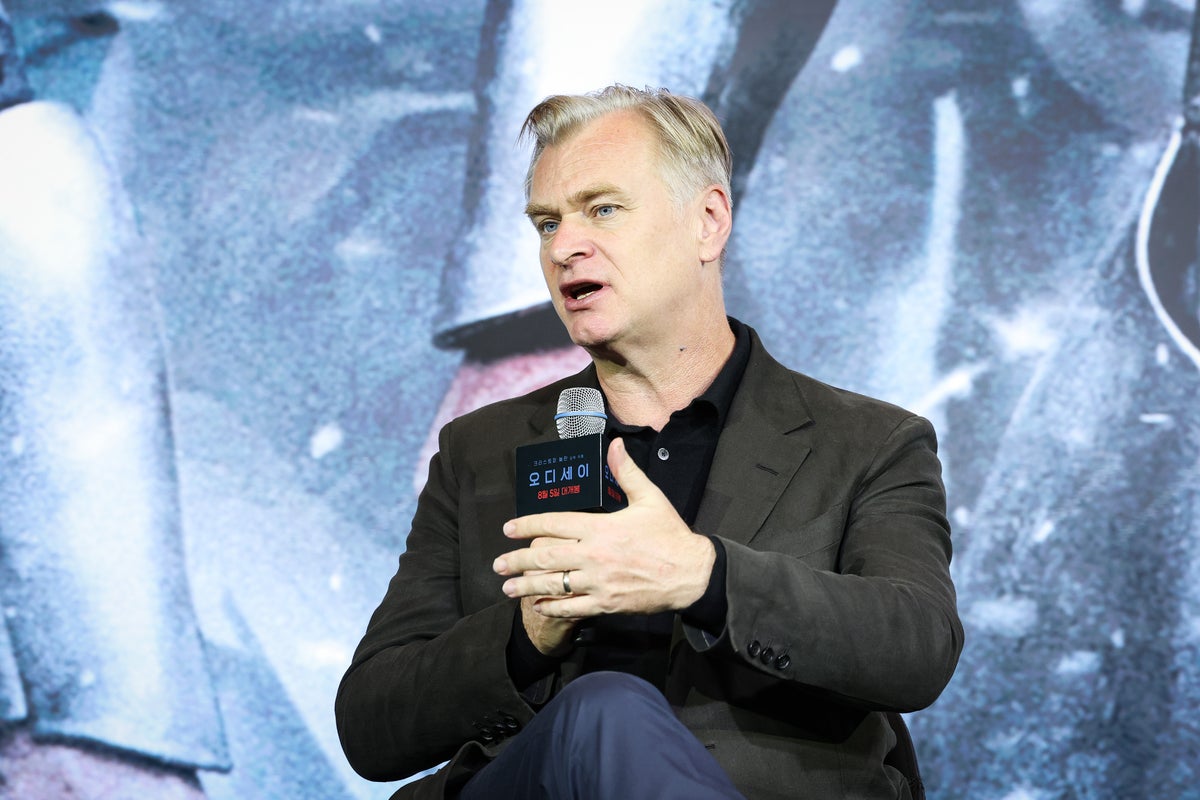
Christopher Nolan calls out a ‘fundamental flaw’ in amateur film criticism (Getty)
On professional film criticism, Nolan said it “tends to understand the necessity for the mechanisms”, arguing that Hollywood had developed “a lingua franca of storytelling” over the past century that had become a widely understood cinematic language with its own conventions, which filmmakers could “break”, “bend” or “move”, but remain conscious of when telling stories.
The Odysseyhas received rave reviews, with The Independent’s Clarisse Loughrey calling it Nolan’s “best film to date” in her five-star review.
The Odyssey is screening in theatres now.
Source: “AOL Entertainment”
